Accuracy is the spec everyone asks about and the one almost nobody sources. Here is what each manufacturer actually publishes, which fields are measured versus calculated, and why no honest guide can crown a universal accuracy winner without a common test protocol.
Here is the answer nobody selling launch monitors wants to give: this research cannot establish a universal accuracy winner. Doing that honestly needs one independent protocol, the same balls, the same conditions, and every unit measured against a common reference. We did not locate a published test covering this full set, and we have not run one.
What we can do is sort by measurement architecture and disclosed evidence. On that basis, the units that publish the most about how they measure are the three-camera photometric systems: the Foresight GC3 and the Bushnell Launch Pro. SkyTrak points to named third-party testing on its discontinued ST+ page, while the current ST MAX uses the same published radar-plus-camera architecture. The Rapsodo MLM2PRO (around check current price) is transparent in a different way: among the pages audited here, Rapsodo alone separates measured fields from calculated ones. And for the Garmin R10, Garmin's published page text is not accessible enough for us to print a sourced specification summary.
That is a ranking of evidence, not a ranking of measured error. Treat it as such.
How we researched this: a research-and-analysis guide built from each manufacturer's current official product page, checked 27 July 2026 and linked in the Sources section. We have not put shots through any of these units, so there are no GolfLaunchLab accuracy figures, no comparison tables of measured error, and no numeric scores on this page. Manufacturer accuracy language is quoted and attributed to the manufacturer, never restated as our finding. Where a maker publishes nothing, we say so instead of borrowing a number from a secondary summary. Prices render from our tracked product data and move constantly; confirm the live price before buying.
Why There Is No Accuracy Winner Here
An accuracy ranking is a measurement claim. To make one you need four things, and we did not locate all four together for this product set.
A common protocol. Same shots, same balls, same temperature and altitude, same reference unit, same operator, published in enough detail that someone else could repeat it. A stated tolerance. None of the consumer-maker pages audited here publish a per-metric error band that can be lined up against a rival's. A named reference. "Close to tour-grade" is meaningless without saying which machine, in what condition, calibrated when. Independence. Evidence selected for a manufacturer's own page is not equivalent to a test commissioned and published independently.
So when a site ranks launch monitors by accuracy and does not show you a protocol, one of two things is happening: it is repeating manufacturer marketing, or it is repeating owner impressions. Both can be interesting. Neither is a measurement.
We used to do a softer version of this ourselves on this page, with phrases like "accuracy champion" and percentages against TrackMan attributed to community testing. Those are gone. What replaces them is narrower and, I think, more useful: what each maker publishes, what it stays quiet about, and what that implies for the kind of practice you are doing.
What Actually Decides Accuracy
Accuracy is not one number. A unit can report ball speed confidently and still be modelling spin, and spin is what makes your ball climb, stall, or curve. So the question worth asking is which fields a unit measures and which it derives.
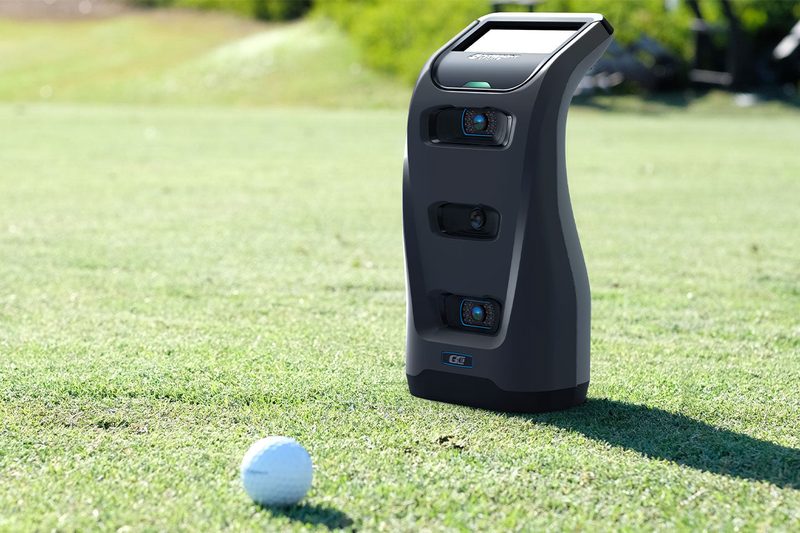
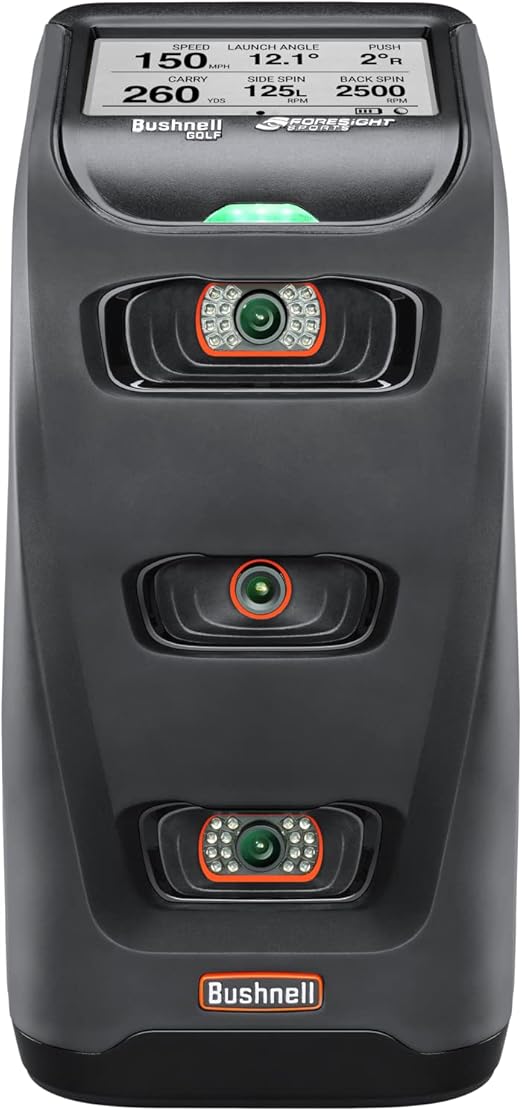
Photometric camera systems photograph the ball and club through impact, so launch and spin come from images taken before the ball has gone anywhere. Foresight describes a "Triscopic High-Speed Camera System" with three precision cameras. Bushnell describes an auto-calibrating three-camera system using high speed, high resolution cameras with infrared. Uneekor's EYE XO2 uses high-speed infrared cameras with its Dimple Optix ball reading.
Doppler radar systems track the ball after it leaves the face, so how much flight the room gives them is part of the equation. That is why radar makers publish setup distances at all: Rapsodo asks for 6.5 to 8.5 feet directly behind the ball, and a little more than 14 total feet indoors once you add 8 feet from ball to net. Our space requirements database collects those published figures across 15 units, and the headline finding there is relevant here too, because eight of fifteen makers publish nothing at all.
Hybrids split the job. SkyTrak's ST MAX and the discontinued ST+ are described by SkyTrak as a dual Doppler radar plus photometric camera system, with radar handling club measurements and the camera handling ball tracking. Rapsodo pairs dual optical cameras with radar processing.
Then there is the part that quietly decides real-world accuracy for a lot of buyers: what the unit needs from you. Rapsodo states that RPT balls are required to show spin numbers. Bushnell states that collecting club data requires the included club markers, on top of a paid plan. Uneekor requires reflective stickers on the clubface. A measured field you cannot access without extra kit is not the same as a measured field.
What Each Maker Publishes
Unit
Architecture (maker's words)
Published data fields
What it needs from you
Accuracy language on the page
Foresight GC3
Triscopic three-camera system
6 ball, 4 club
No subscription for its own software
None stated in the page text we read
Bushnell Launch Pro
Auto-calibrating three-camera with infrared
Ball data on the free tier; club data on a paid plan
Included club markers plus a paid plan for club data
"Tour-level accuracy", Bushnell's own wording
SkyTrak ST MAX
Dual Doppler radar plus photometric cameras
9 ball, 5 club
Paid membership for Course Play and game-improvement tools
"Tour-level accuracy" unattributed; the ST+ page cites GolfBays and Golf Laboratories
Uneekor EYE XO2
High-speed infrared cameras, Dimple Optix
24 ball and club parameters
Clubface stickers; Pro tier for third-party sim software
None comparable in the page text we read
Rapsodo MLM2PRO
Dual optical cameras plus radar processing
15 total, 8 described as measured
Callaway RPT balls for spin rate and spin axis
"Precision accuracy" marketing, no tolerance published
Garmin Approach R10
Not retrievable from the page text
Not retrievable
Not retrievable
Not retrievable
Read that table as a disclosure audit rather than a leaderboard. The most useful column is the fourth one, because it is where the gap between a spec sheet and your actual practice session lives.
Foresight GC3: A Three-Camera Specification
Three-Camera PhotometricNo Subscription For Its Own Software
Foresight GC3
Publishes its camera architecture and its field list, and does not publish an accuracy number.
Foresight describes the GC3 as a Triscopic High-Speed Camera System built around three precision cameras, and lists six ball parameters (launch angle, side angle, ball speed, total spin, carry, and side spin or spin axis) plus four club parameters (club head speed, smash factor, club path, and angle of attack). Its own software suite, FSX Play, FSX 2020, and FSX Pro Performance, is included with 25 courses, and the page states no subscription is needed.
The page we read carries no accuracy tolerance and no comparison claim. That absence cannot be converted into either praise or criticism, so this guide records it simply as an undisclosed tolerance.
On price, be careful, because two different products get called "the GC3." Foresight's own store lists the GC3 at $5,999, reduced from $6,999. The Amazon listing we track is the GC3/S at around check current price. Those are not the same purchase, and we are not going to blur them into one figure. Check which unit and which bundle you are actually looking at before you compare prices.
Bushnell Launch Pro: Camera Hardware, Subscription Gates
Three-Camera With InfraredClub Data Is Gated
Bushnell Launch Pro
Photometric hardware where the plan you pick decides what data you see.
Bushnell describes the Launch Pro as an auto-calibrating three-camera system using proprietary high speed, high resolution cameras with infrared, rather than a radar design. On the data side, Bushnell is unusually explicit about what is gated. Ball data, including ball speed, carry, total spin, launch angle in both planes, spin tilt axis, backspin, sidespin, apex, descent angle, offline, curve, and hang time, is available on the free tier. Club head speed, smash factor, club path, and angle of attack require a paid plan, and Bushnell notes that collecting club data requires the included club markers.
The plans as published: Silver at $199 per year adds full app access with ball and club data plus five courses. Gold at $499 per year adds 25 courses and GSPro access, with GSPro itself listed as a separate $250 per year third-party cost that requires an active Gold plan. That is a real ownership cost, and it is the honest counterweight to the hardware price.
Bushnell calls the system "Tour-level" but publishes no numerical tolerance with that claim. What is documented is the software relationship: the Launch Pro runs Foresight's FSX platform.
Two prices are in play here as well. Bushnell's own store shows $2,999.99 for the Circle B Edition; the Amazon listing we track sits at around check current price. Configurations differ, so compare like for like.
Attributed evidence beats unattributed marketing, even when the attribution is the maker's choice.
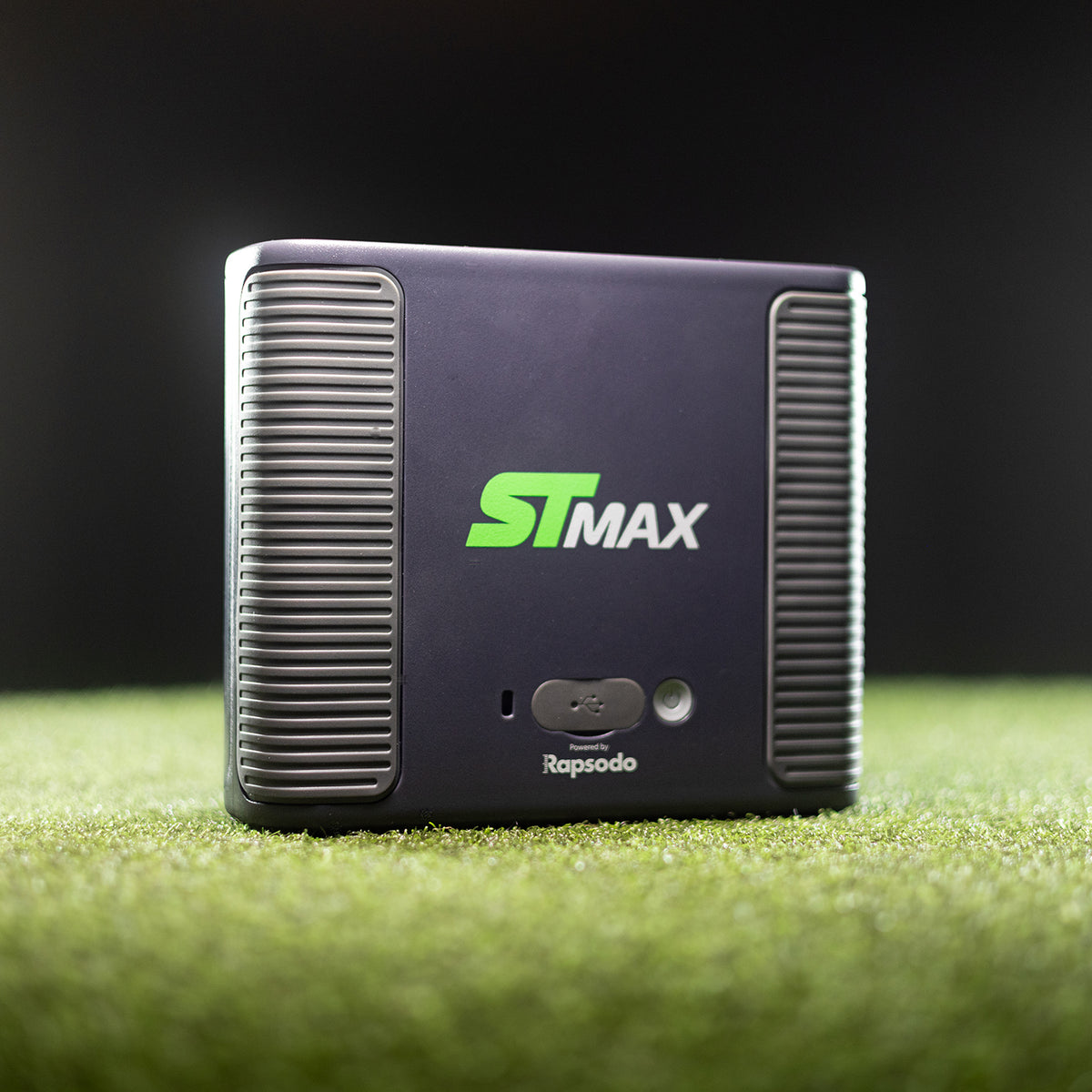
SkyTrak describes the ST MAX as dual Doppler radar combined with photometric cameras for enhanced ball tracking, and lists 14 data fields: nine ball metrics (carry distance, total distance, ball speed, back spin, side spin, descent angle, side angle, launch angle, shot shape) and five club metrics (club head speed, smash factor, club path, face angle, face to path). SkyTrak's own store shows $1,995 on sale from $2,995.
The reason it earns a place in an accuracy discussion is the sourcing. On the discontinued ST+ page, SkyTrak states precision "within 2 yards of the industry's leading professional launch monitors costing upwards of $20,000" and attributes that to third-party testing by GolfBays, alongside robot testing at Golf Laboratories that it says produced results virtually indistinguishable from leading commercial units. That is still manufacturer-selected evidence on a manufacturer's page. But naming the tester and the reference class is more than anyone else here does, and it is checkable in a way that "tour-level" is not.
Cost of ownership matters on this one. SkyTrak states that basic features are free while Course Play and game-improvement tools need a paid membership across Essential, Core, and Elite tiers, with a 14-day trial included. Tier pricing is not published on the product page.
If you were shopping the older SkyTrak+, note that SkyTrak's page now states that unit is no longer available. Our ST+ versus EYE XO2 comparison covers what that means for buyers.
Rapsodo MLM2PRO: Measured and Calculated Fields Disclosed
Publishes Measured vs CalculatedSpin Needs RPT Balls
Rapsodo MLM2PRO, around check current price
Its product page separates measured fields from calculated ones.
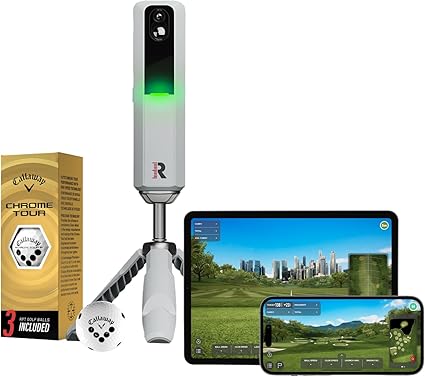
Rapsodo publishes a distinction the other audited product pages do not: the split between what the MLM2PRO measures and what it calculates afterwards. Of 15 metrics, eight are described as measured (ball speed, club speed, launch angle, launch direction, spin rate, spin axis, club path, angle of attack). The rest, including smash factor, carry distance, total distance, side carry, apex, shot type, and descent angle, are calculated.
That distinction is useful when comparing specifications, and it comes with a condition you must plan around: Rapsodo states that RPT balls are required to show spin numbers, specifically Callaway RPT Chrome Soft X. If you do not buy those balls, the spin fields are not available to you.
The rest of the published picture: dual optical cameras with radar processing, Impact Vision video at 240 frames per second, compatibility listed with GSPro, E6 Apex, E6 Connect, and Awesome Golf, and a 45-day trial Premium membership included with purchase, which auto-renews unless cancelled. Price on Rapsodo's page is check current price, reduced from $699.99.
The Garmin Approach R10 is the unit most readers of this page are cross-shopping, and it is the one we have least to say about here, on purpose.
Garmin's official R10 product page renders its specifications through JavaScript, and the accessible page text carries the product name and not much else. No metric list, no measured-versus-estimated breakdown, no setup dimensions. That matches what we found building our space requirements database, where the R10 is recorded as UNPUBLISHED across every space column.
So this page will not print an R10 metric count, an accuracy characterisation, or an indoor-versus-outdoor accuracy claim sourced to Garmin, because we could not read those things on Garmin's page and we are not going to reconstruct them from memory or from a secondary roundup. The tracked price is around check current price; our review covers the claims we can source without dressing an unsourced summary up as a specification.
The Reference Tier, and What It Is Actually For
When people ask which launch monitor is most accurate, they often mean the professional reference tier. TrackMan hardware, including the TrackMan iO at around $13,995, and Foresight's GCQuad sit in that high-cost category.
A fitting studio and a home practice bay have different purchase requirements. This guide therefore does not use professional adoption or price as a substitute for a published accuracy test.
The Uneekor Eye Mini at around check current price and the ceiling-mounted EYE XO2 at $10,999 sit between those worlds. We have not tested any of them against a reference machine, and we are not going to publish a percentage that implies we have.
Sources
Foresight Sports, GC3 official product page (Triscopic three-camera system, 6 ball and 4 club parameters, included FSX software, no subscription needed, store pricing)
Bushnell Golf, Launch Pro official product page (three-camera infrared system, free tier ball data, club data behind a paid plan and included club markers, Silver and Gold plan pricing, GSPro access terms, "Tour-level accuracy" wording, Circle B Edition pricing)
SkyTrak, ST MAX official product page (dual Doppler radar plus photometric cameras, 9 ball and 5 club fields, pricing, membership tiers and trial)
Rapsodo, MLM2PRO official product page (pricing, dual camera plus radar, 15 metrics with 8 measured, RPT ball requirement for spin, 240 fps Impact Vision, simulator compatibility, 45-day Premium trial, indoor and outdoor space requirements)
Uneekor, EYE XO2 official product page (infrared cameras with Dimple Optix, 24 parameters, clubface sticker requirement, subscription tiers)
Garmin, Approach R10 official product page (specifications are JavaScript-rendered; accessible page text did not yield a metric list, accuracy language, or setup dimensions)
All pages checked 27 July 2026. Manufacturer specifications, pricing, subscription tiers, and compatibility lists change without notice.
Editorial Independence: Ordering reflects published measurement architecture, available evidence, ownership costs, and recurring owner reports. Manufacturer accuracy language is attributed to the manufacturer. Some links are affiliate links and may earn a commission at no cost to you; manufacturer links are not.
FAQ
Published information alone does not establish a universal winner. Naming one requires an independent protocol run across every unit with the same balls, conditions, and reference machine, and we did not locate a published test covering this full set. Ranked by disclosure rather than measured error, the three-camera systems from Foresight and Bushnell publish detailed architecture, SkyTrak attributes testing on its ST+ page, and Rapsodo separates measured fields from calculated ones.
They work differently, and the honest framing is architectural rather than a verdict. Camera systems photograph the ball and club at impact, so they do not need ball flight to report launch and spin. Radar systems track the ball after impact, which is why radar makers publish setup distances: Rapsodo asks for 6.5 to 8.5 feet behind the ball and a little more than 14 total feet indoors. That tells you which architecture suits a short room. It does not, on its own, tell you which unit reports a more accurate number for your swing. See our radar vs camera breakdown.
We do not publish an answer to this, and the reason is specific. Garmin's official R10 product page renders its specifications through JavaScript, and the accessible page text does not contain a metric list, an accuracy statement, or setup dimensions. Our space requirements database records the R10 as UNPUBLISHED for the same reason. Rather than repeat a comparison figure from a secondary source, we leave it blank and say why.
On SkyTrak's ST+ page, it means SkyTrak states precision within 2 yards of professional launch monitors costing upwards of $20,000, and attributes that figure to third-party testing by GolfBays. Two things follow. It is a distance-agreement claim on selected metrics, not a blanket accuracy rating across every field. And it is evidence the manufacturer chose to publish, not an independent test we ran or verified. It is more checkable than an unattributed "tour-level" claim, which is why we quote it with the attribution attached.
Three requirements are worth planning for. Rapsodo states that RPT balls, specifically Callaway RPT Chrome Soft X, are required to show spin numbers on the MLM2PRO. Bushnell states that collecting club data on the Launch Pro requires the included club markers, on top of a paid plan. Uneekor's EYE XO2 needs no special ball markings but does require reflective stickers on the clubface. Our marked ball guide goes through this in more detail.
The useful requirement is a unit whose published fields match the questions in your practice plan. Disclosure about measured versus modelled fields, ball or marker requirements, room size, and subscriptions is more actionable than an unsupported accuracy leaderboard. Not sure which tier fits you? Try our 60-second quiz.
Get Better Golf-Gear Research in Your Inbox
New comparison guides, product updates, and practical simulator-planning research. No daily deal spam. Free bonus: the golf distance cheat sheet, instantly.