Backyard Golf Ideas
9 Setups Worth Building
From a ten-minute putting mat to a pergola with its own green, here are nine backyard golf setups organized by space and budget, with the gear that makes each one work.
The best backyard golf setups scale with your space and budget: start with a putting mat or chipping net (under $150, works tonight), step up to a full-swing net station with a hitting mat, and go permanent with installed putting turf when you're ready. Nine ideas below, from a deck strip that fits a townhouse to a pergola lounge with its own green. Every one of them beats a range trip you don't have time to take.
The 9 Backyard Golf Ideas
These are organized roughly by commitment: the first few work with whatever lawn you have and pack away, the later ones are built-in landscape upgrades. Mix and match, and remember the golden rule of home practice: the setup you'll actually use beats the impressive one you won't.
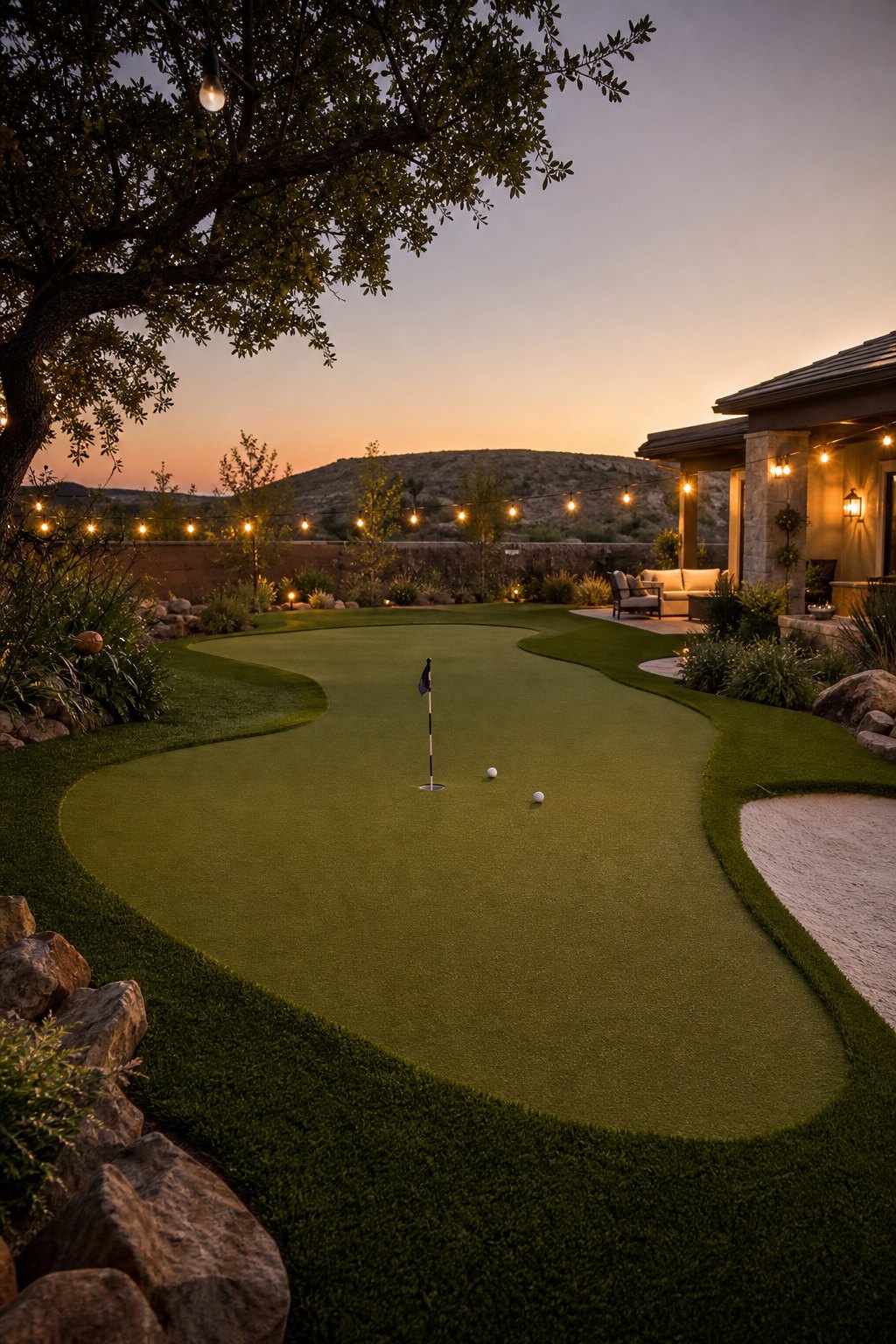
The Backyard Putting Green
The king of backyard golf ideas, and the one that gets used the most. A synthetic putting green needs surprisingly little space (even 6 by 10 feet works), rolls true in any weather, and turns ten spare minutes into real short-game practice. Start simple with a quality putting mat on a flat patch, or go permanent with installed turf, a cup, and a flag. Either way, putting is the fastest place to drop strokes, and having the green ten steps from the door is how practice actually happens.
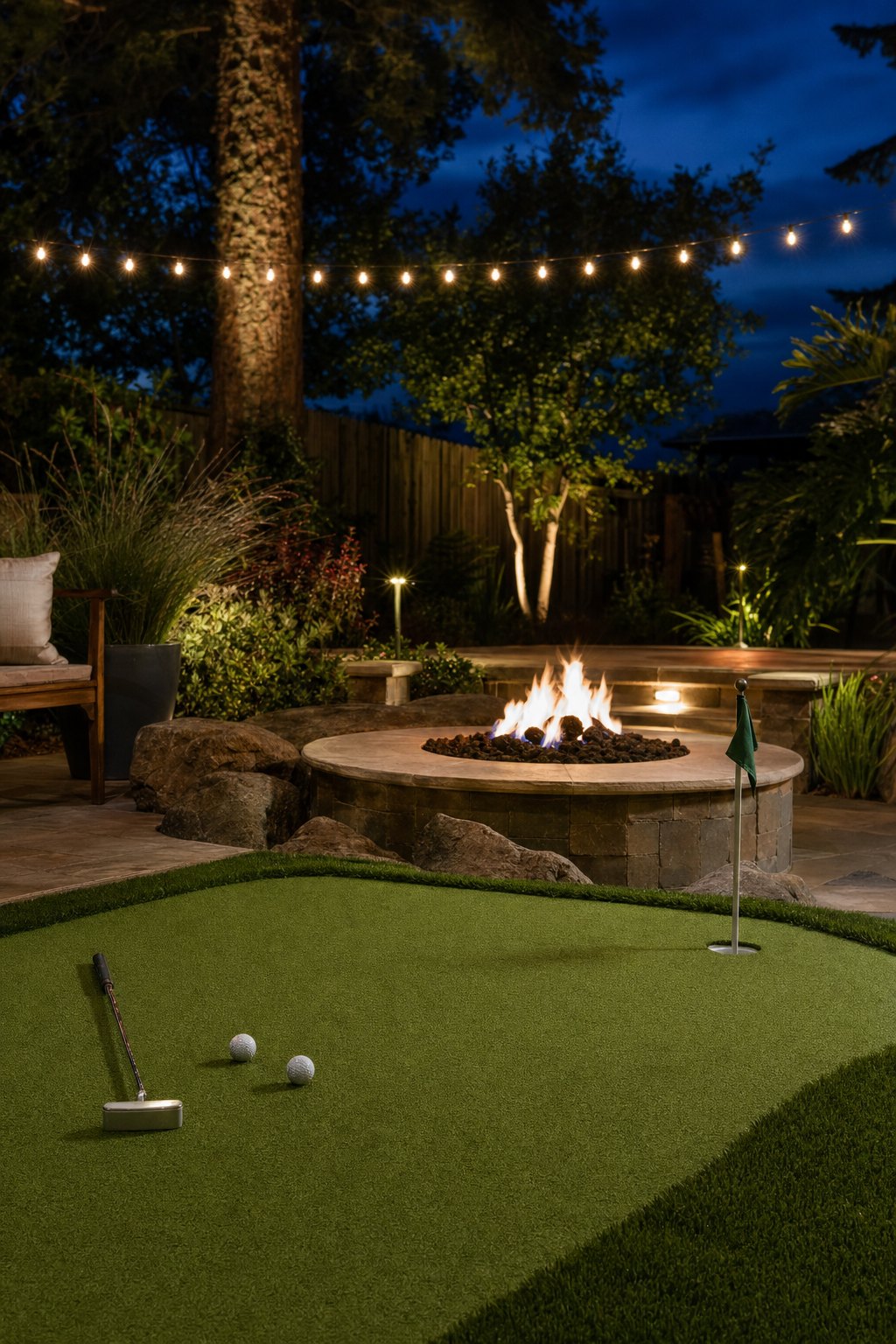
Putting Green Meets Fire Pit
The upgrade nobody regrets: build the putting green into the hangout. A green wrapped around a fire pit and string lights means golf happens during barbecues, night caps, and long summer evenings, not just "practice time." It's the version of backyard golf that the whole household buys into, and the one guests remember. If you're planning a patio refresh anyway, running a strip of putting turf through it costs less than most furniture sets.
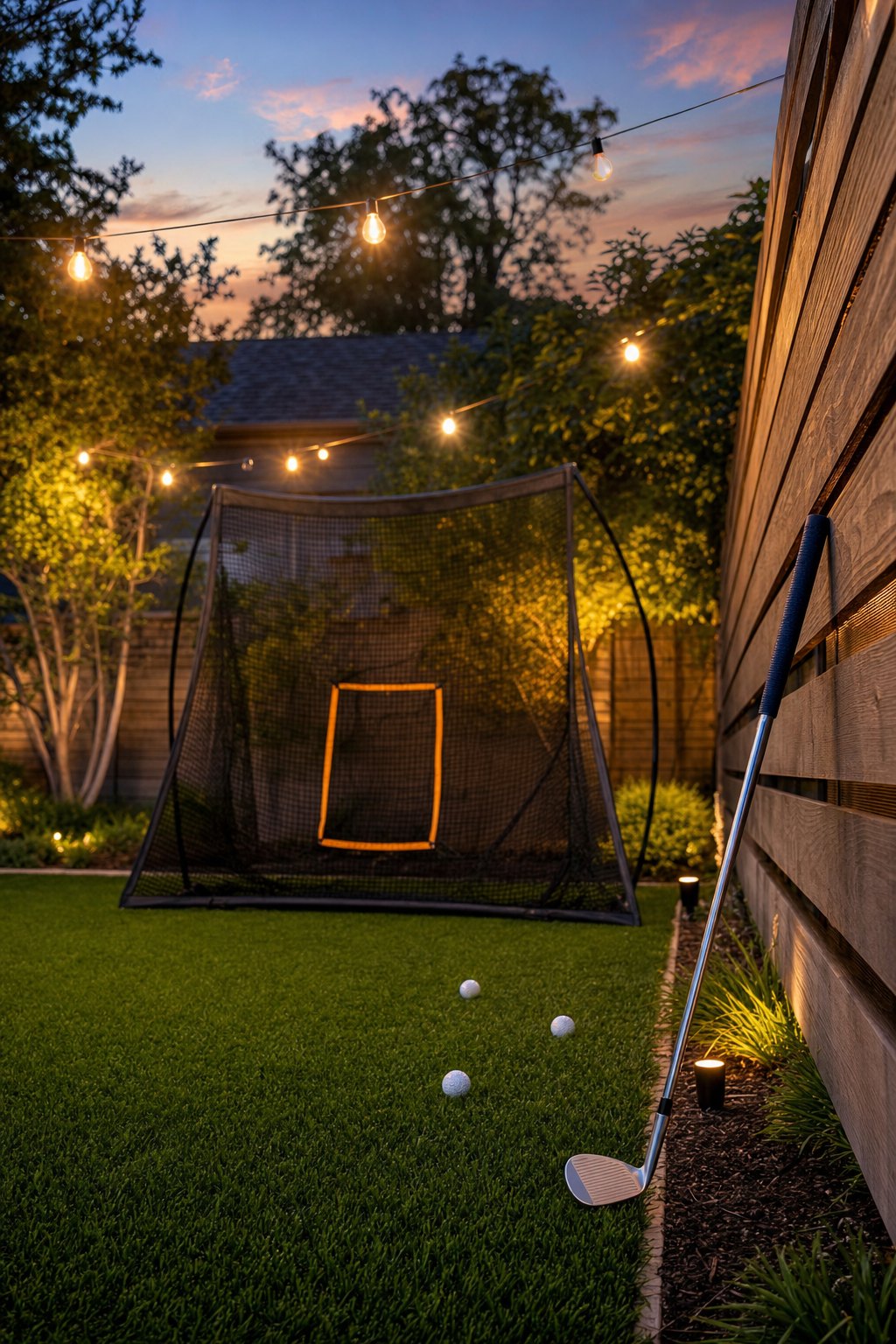
The Chipping Corner
A chipping net, a small mat, and a corner of lawn is the highest-value-per-dollar practice station in golf. Twenty wedge reps a night quietly transforms your scoring, and the whole setup packs away in a minute. Add string lights and it works after dark, which is exactly when most of us actually have the time.
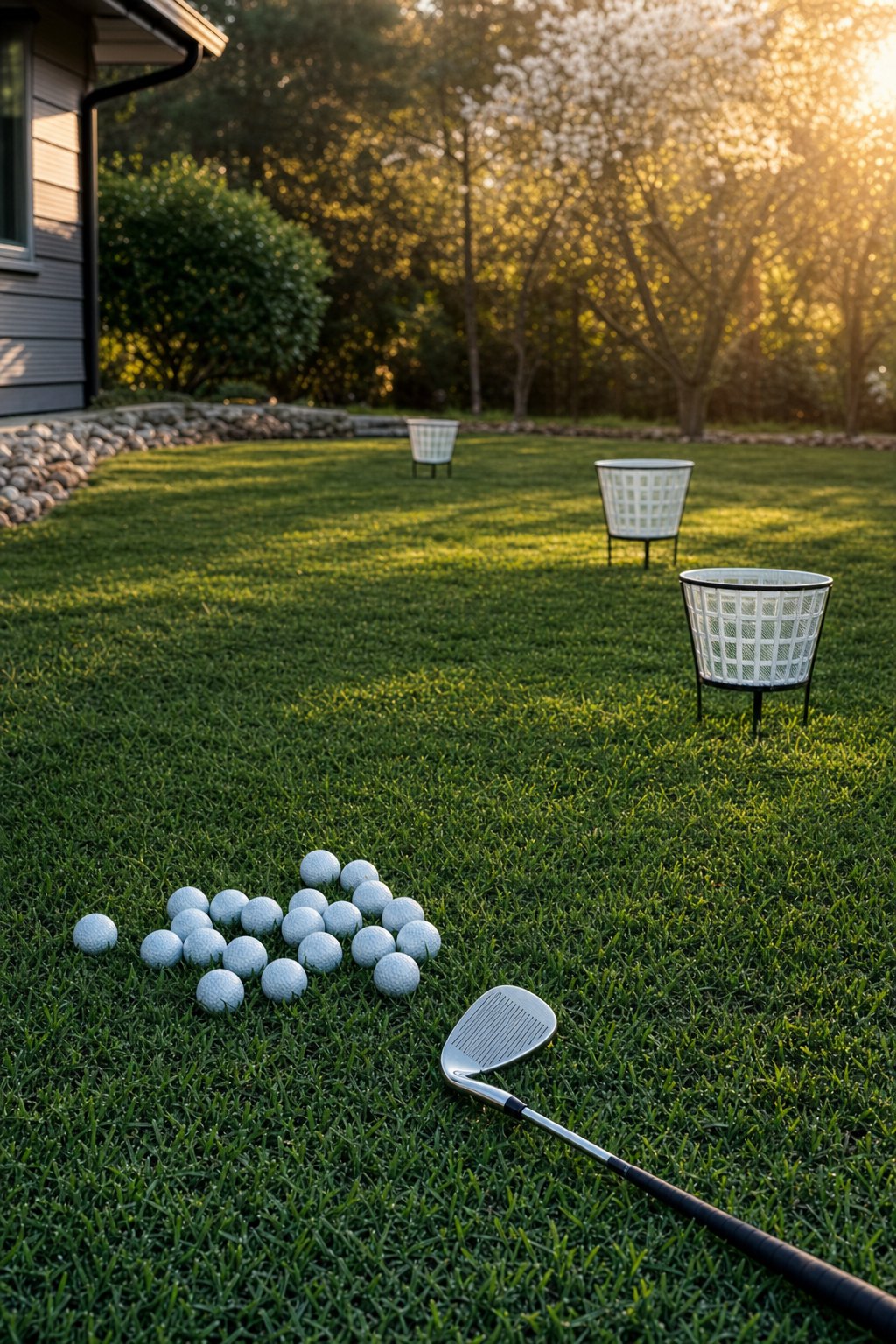
The Target Range
Skip the net and scatter targets instead: three baskets or towels at different distances turns the lawn into a distance-control range. Play games against yourself (three points for the far basket, minus one for a miss) with a shag bag of practice balls. It's the drill pros use for wedge feel, disguised as a backyard game you'll actually enjoy.
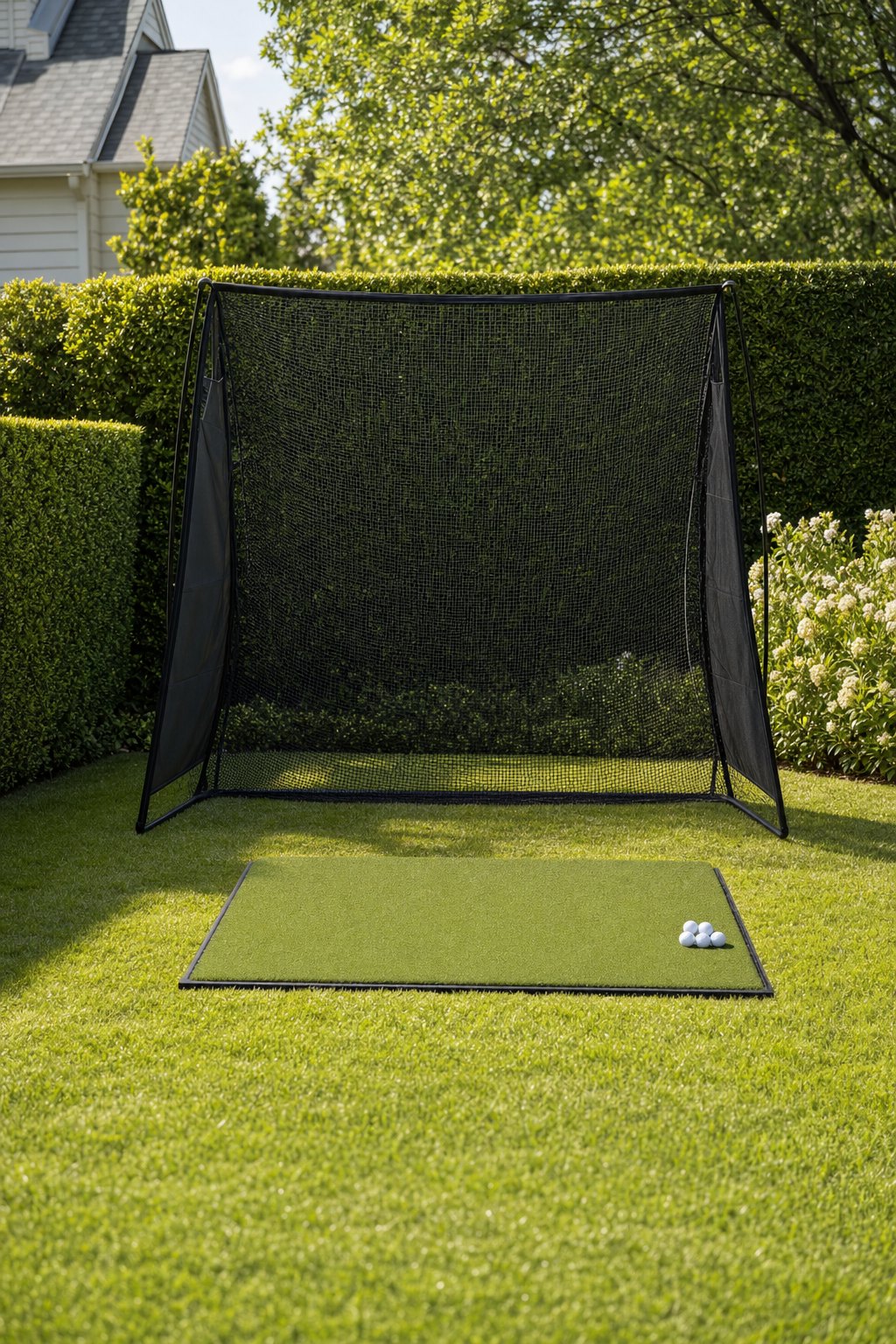
The Full-Swing Net Station
The setup that lets you hit driver at home: a quality hitting net, a proper mat to protect your wrists and your lawn, and ten feet of clearance. Add a launch monitor beside the mat and every backyard session produces real numbers: ball speed, carry, clubhead speed. This is the station that builds swing changes, because reps you can do daily beat a weekly range trip.
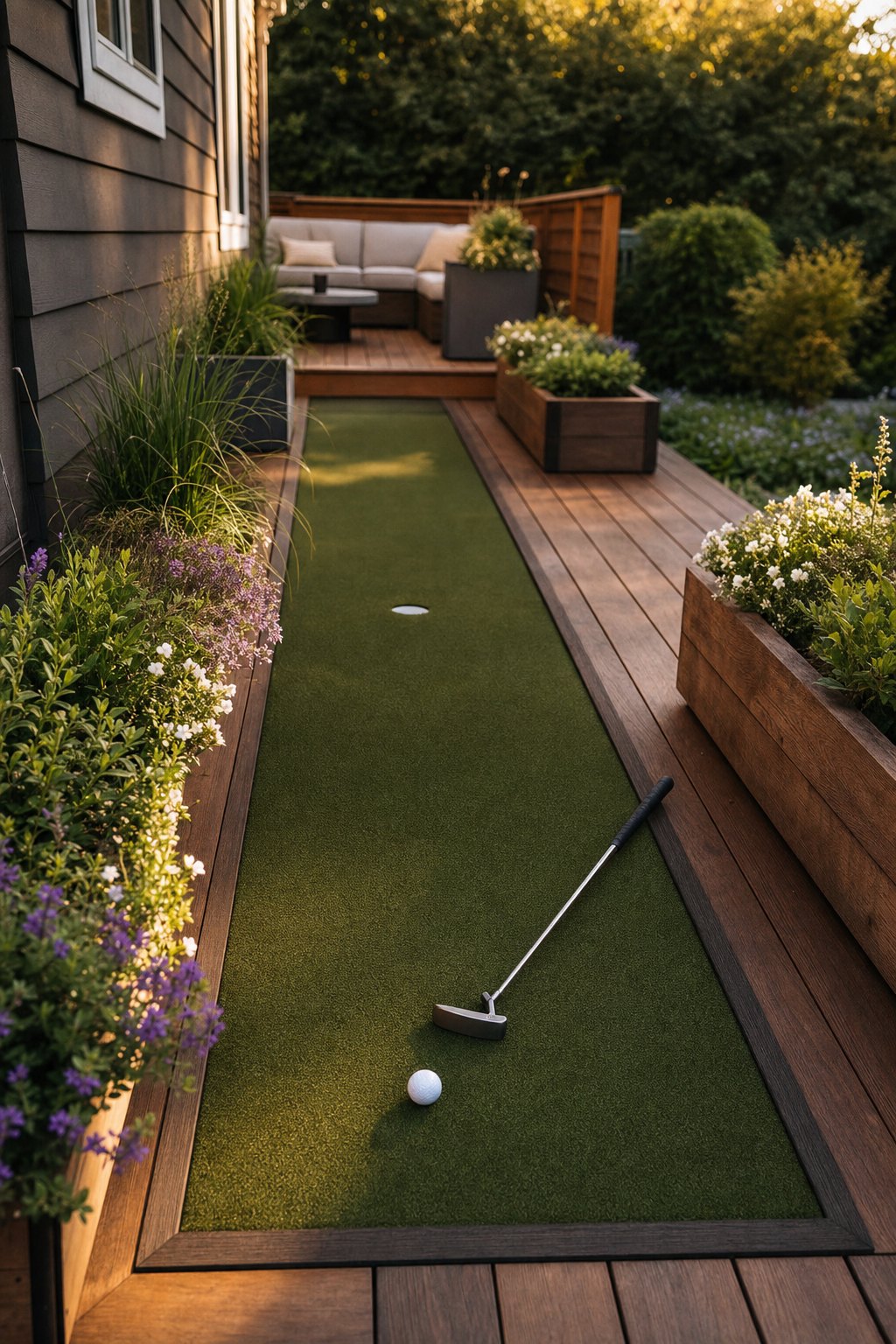
The Deck Putting Strip
No lawn? No problem. A putting strip laid along a deck or patio takes a footprint most furniture wouldn't fit and gives you a permanent short-game station. Frame it with planters and it looks intentional, not like sports equipment stored outside. Renters take note: a roll-out putting mat version of this packs away completely.
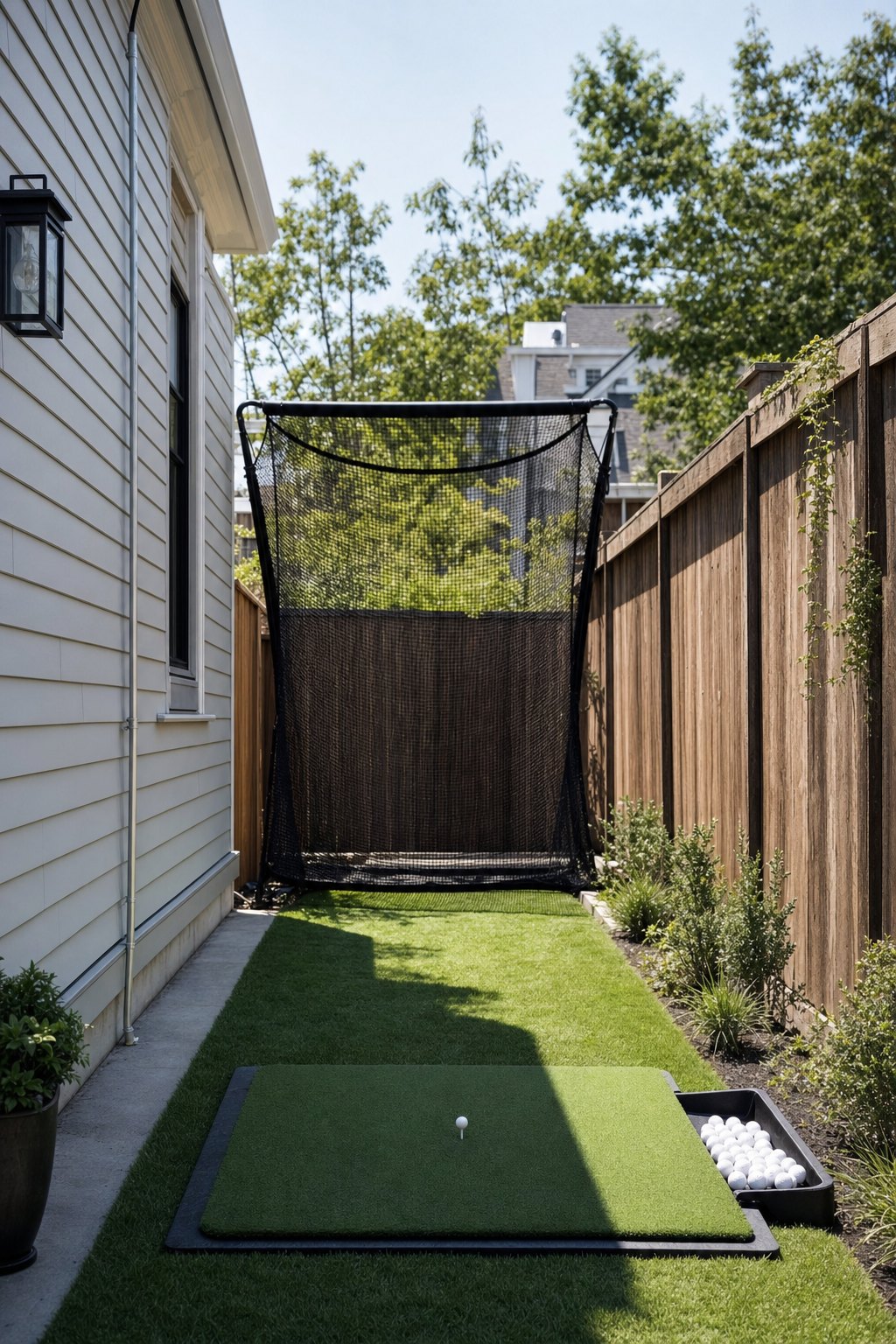
The Side-Yard Practice Bay
That dead strip between the house and fence is secretly a golf hole. A run of artificial turf, a mat at one end, and a net at the other converts the most wasted space on the property into a private practice bay. Narrow is fine, you only need width for a swing arc, and the fence line naturally frames your alignment.
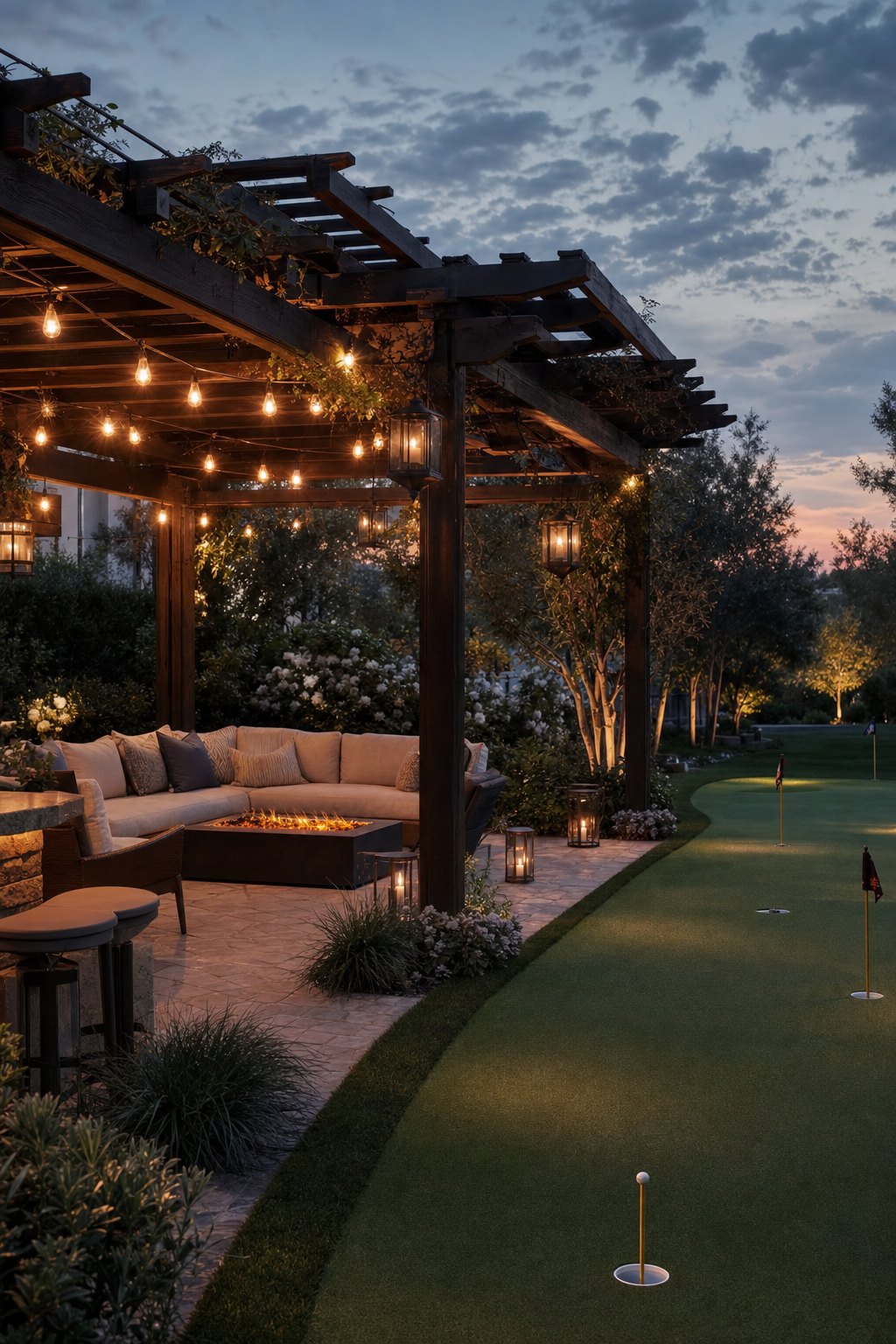
The Pergola Golf Lounge
The aspirational one: an outdoor living room where the putting green runs right past the pergola. Lanterns, comfortable seating, and a green you can play from your chair. It's backyard golf as landscape design, and the version that adds real value to how the whole yard gets used. Save this one for the renovation board.
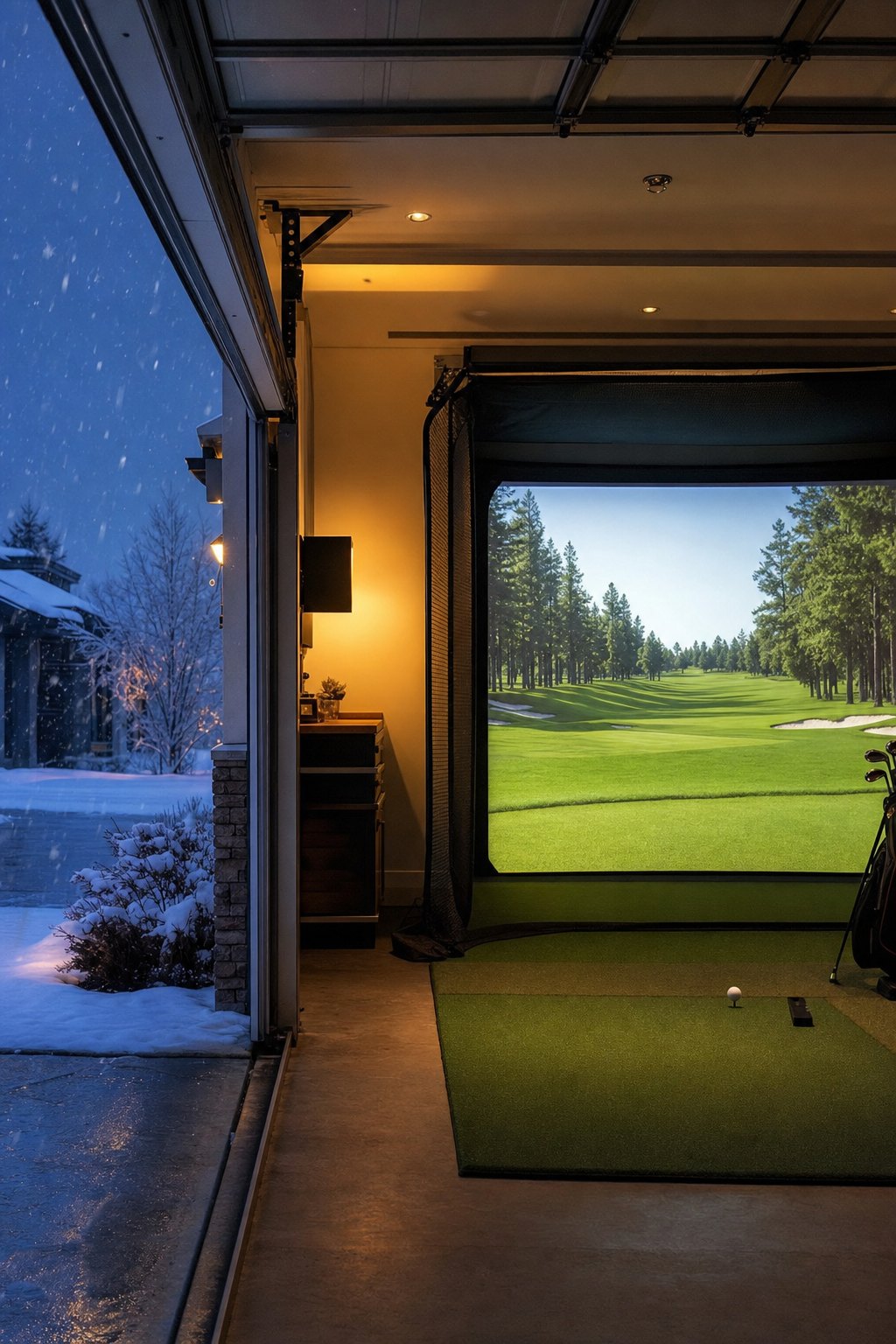
The Garage Bay (For When Weather Wins)
Every backyard setup needs a winter plan. A garage bay with a net or impact screen and a launch monitor keeps the reps going when it's dark at five and snowing sideways. If you have the ceiling height, it's the natural next step from the backyard net station, and our home simulator guide covers every budget tier from net-and-monitor to full sim.
Backyard Putting Greens 101
The backyard putting green deserves its own word, because it's the most-searched and most-loved backyard golf project. You have three tiers. Roll-out mats ($50-$250): instant, renter-friendly, and the good ones roll surprisingly true; see our putting mat rankings. DIY synthetic turf ($500-$2,500): a weekend project with turf rolls, a compacted base, and a cup or two; holds up for years and plays in any weather. Professional installs ($3,000-$15,000+): contoured, multi-hole greens built like landscaping, priced by square footage and shaping.
Whichever tier, put it where you'll walk past it daily. A modest green by the back door out-practices a showpiece in a far corner every single time.
The Gear That Makes Backyard Golf Work
Four pieces cover every idea on this page: a full-swing net that can genuinely stop a driver, a hitting mat that protects your joints and your lawn, a putting surface, and a chipping net or a few targets. Add a launch monitor when you want numbers instead of guesses; our beginner guide covers the easy picks, and outdoor radar units love a backyard's open space.
One honest warning: cheap nets are the one place not to save money. A failed net panel and a driver ball through a window ends more backyard golf careers than winter does.
FAQ
Get Better Golf-Gear Research in Your Inbox
New comparison guides, product updates, and practical simulator-planning research. No daily deal spam. Free bonus: the golf distance cheat sheet, instantly.