A beginner's launch monitor should be easy to set up, easy to read, and hard to outgrow. Here are the units that give new golfers real, trustworthy feedback without a steep learning curve or a scary price.
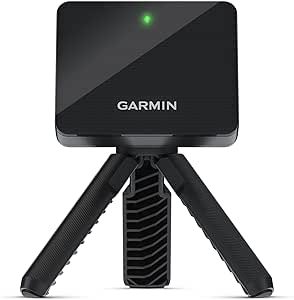
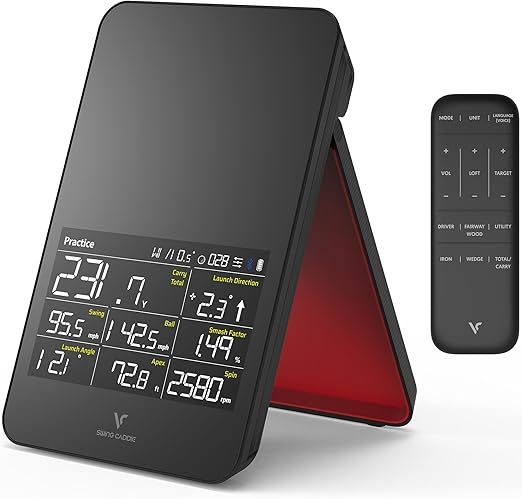
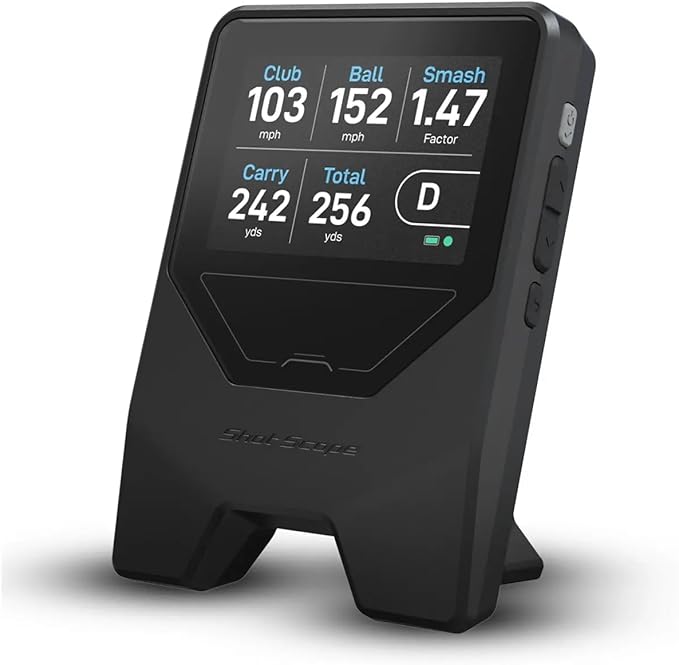
The best launch monitor for most beginners is the Garmin Approach R10 (around $489.50†). Its app is genuinely easy to use, it gives you 14 metrics to grow into, and it doubles as an entry into home simulation later, so you won't outgrow it in a season. If you want the absolute simplest experience with no phone at all, the Swing Caddie SC4 (around check current price) literally speaks your carry distance out loud. And on a tight first budget, the Shot Scope LM1 (around check current price) gives you five trustworthy numbers on a built-in screen with no subscription. When you're ready to actually see your mistakes on video, the Rapsodo MLM2Pro (around $599.98†) is the natural step up.
How we reviewed this: This is a research-and-analysis guide, not a bench test. We have not put shots through these units ourselves. Rankings weigh published specifications, ease of setup, app usability, and subscription costs against price, informed by independent third-party testing and owner feedback from communities like r/golf. Prices are verified against current retail listings and date-stamped; confirm today's live price before buying.
What Beginners Actually Need in a Launch Monitor
As a new golfer, you do not need 30 data points or tour-grade photometrics. You need numbers you can trust, an experience that isn't fiddly, and a price that isn't frightening for a hobby you're still exploring. Four things matter most.
Easy setup and easy reading: if it takes 20 minutes and a manual to see a number, you won't use it. The best beginner units are on and reading in under a minute. Trustworthy fundamentals: ball speed, clubhead speed, smash factor, and carry distance. Get those right and you can actually track improvement. No subscription trap: a cheap unit with a monthly fee costs more over two years than a pricier one you own outright. Room to grow: a unit that also drives simulator software means you won't have to rebuy when you catch the bug.
Every pick below clears those four filters. None of them require you to be a tech expert, and none of them will feel like a waste once your game develops.
#1 - Garmin Approach R10 (Best for Beginners Overall)
The R10 hits the beginner sweet spot better than anything else. The Garmin Golf app is clean and approachable, setup is genuinely quick, and you get 14 metrics including carry, clubhead speed, smash factor, and estimated spin, so there's real data to learn from without drowning in it. Around $489.50† list (and often less on sale), it's affordable enough for a hobby you're still testing.
What makes it the smart beginner buy is that you won't outgrow it. It works indoors and outdoors, and it drives simulator software like Garmin Home Tee Hero and E6 Connect, so the day you decide to build a garage setup, the R10 comes with you. It's a Doppler radar unit, so spin is estimated rather than measured and it's happiest outdoors with room to see full ball flight, but for a new golfer that's a non-issue.
Turn it on, hit a ball, hear your distance. That simple.
If "easy" is your top priority, the Swing Caddie SC4 is the pick. It's a portable unit that sits behind you, and after each shot it announces your carry distance out loud, so you can rip drivers at the range without touching a phone. There's a clear built-in display for ball speed, clubhead speed, smash factor, and carry, plus an optional app if you want to log sessions later.
For a beginner who just wants honest distance feedback with zero friction, that voice-and-screen simplicity is genuinely valuable, and it's a big reason the Swing Caddie line is so popular at driving ranges. It won't drive a home simulator and it doesn't measure spin, but as a low-fuss "how far did that actually go" tool at around check current price, it's hard to beat.
If your first budget tops out around $200, skip the mystery boxes on Amazon and get the Shot Scope LM1. For around check current price with no subscription, it shows five core metrics on a built-in display, ball speed, clubhead speed, smash factor, carry, and total distance, from a brand with a real reputation in golf tech.
You don't get spin or simulator support, but you get honest fundamentals with no recurring cost, which is exactly what a new golfer needs to start tracking progress. See our under $500 guide for how it compares with the PRGR and FlightScope Mevo at the bottom of the market.
Once you've got the basics and want to actually understand why a shot went sideways, the Rapsodo MLM2Pro (around $599.98†) is the beginner's best step up. It pairs radar with a camera, so it measures spin rather than estimating it, and it records impact video so you can literally watch your strike. It also bundles E6 Connect simulator software, making it an easy on-ramp to home practice.
It costs about $100 more than a Garmin R10 and, like other radar units, does its best work outdoors. But for a improving beginner who learns visually, seeing the ball come off the face is worth the small premium. If measured spin and video aren't priorities yet, stick with the R10 and save the money.
Editorial Independence: Rankings weigh published specifications, ease of use, and owner feedback against price, not our own bench tests. Affiliate links earn a small commission at no cost to you.
FAQ
The Garmin Approach R10 (around $489.50†) is the best pick for most beginners. It has an easy-to-use app, 14 metrics to learn from, and it doubles as a home-simulator unit later, so you won't outgrow it. For the simplest possible experience with no phone, the Swing Caddie SC4 (around check current price) speaks your distance out loud.
Not at first. As a new golfer, the numbers that help most are carry distance, ball speed, clubhead speed, and smash factor, all of which a Garmin R10 or Swing Caddie SC4 provides. Measured spin matters more as you start shaping shots. When you get there, the Rapsodo MLM2Pro adds camera-measured spin and impact video.
The Swing Caddie SC4 is the simplest for most beginners: you turn it on, hit a ball, and it announces your carry distance out loud with no phone required. The Garmin R10 is also very approachable through the Garmin Golf app if you want more metrics and simulator support down the road.
You can start well for under $200 with the Shot Scope LM1, which gives trustworthy fundamentals and no subscription. The sweet spot for most beginners is the Garmin R10 at around $489.50†, which adds far more data and simulator support you can grow into. Spending four figures rarely makes sense until you know you're committed.
Some can. The Garmin R10 drives Home Tee Hero and E6 Connect, and the Rapsodo MLM2Pro includes E6 Connect, so both can anchor a starter home simulator. The Swing Caddie SC4 and Shot Scope LM1 cannot. If you think you'll want a simulator, our home simulator guide covers the best sim-ready units.
Get Better Golf-Gear Research in Your Inbox
New comparison guides, product updates, and practical simulator-planning research. No daily deal spam. Free bonus: the golf distance cheat sheet, instantly.