Golf Simulator Room Ideas
8 Setups Worth Copying
From a spare bedroom with a net to a basement sports bar, eight simulator room layouts matched to the space and budget your house actually has, with the build guides for each.
Great simulator rooms come down to matching the layout to the space you actually have: basements and garages for full builds, attics and spare bedrooms for clever compact setups, and putting nooks where a swing won't fit. Eight ideas below with the honest requirements for each. The non-negotiables everywhere: enough ceiling for YOUR swing (measure it, usually 9 to 10 feet), depth for ball flight to the screen, and a launch monitor suited to indoor use.
The 8 Simulator Room Ideas
Ordered from the full-commitment builds to the setups that borrow a corner of an existing room. Every layout here funnels into the same advice: get the room's measurements first, pick the launch monitor second, and let the finishes come last.
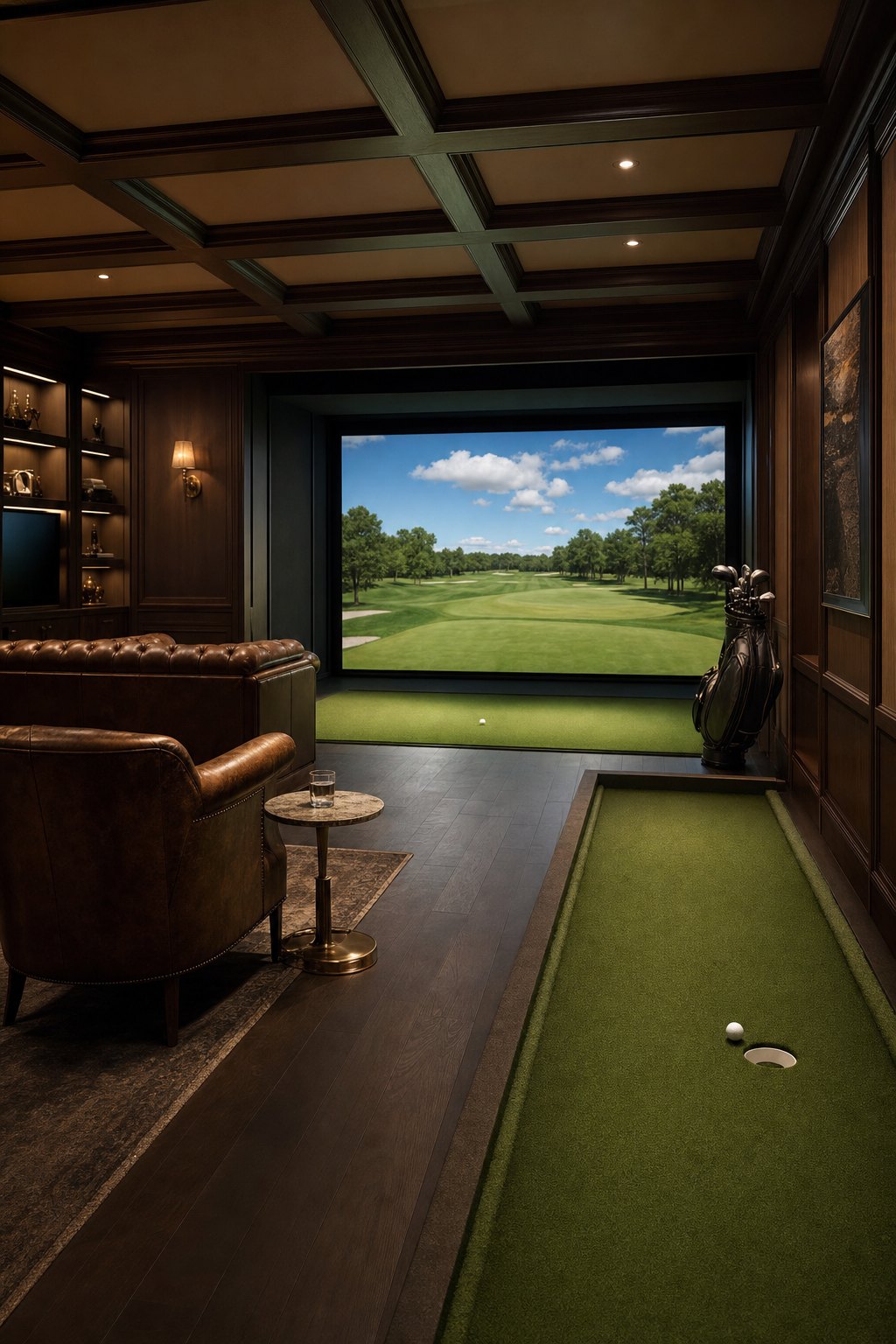
The Luxury Basement Lounge
The full vision: dark wood, leather chairs, a putting strip in the floor, and the impact screen glowing like a window onto a fairway. This is the sim room as destination, the place the whole house migrates on winter nights. The build behind it is covered in our man cave guide; budget-wise it's the finished-basement tier, where the room costs as much as the simulator.
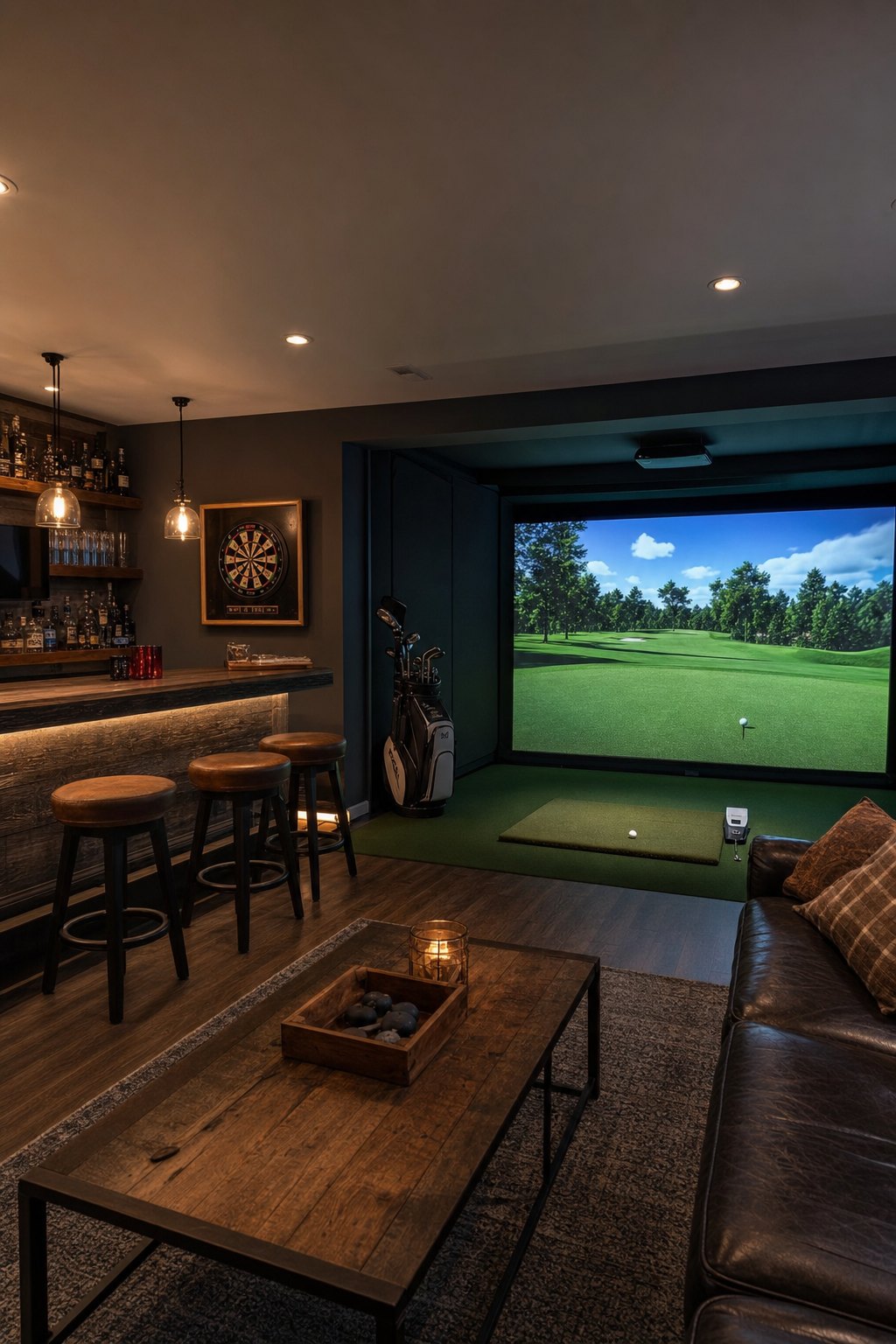
The Sports Bar Build
Add a bar counter, stools, and a dartboard and the sim room becomes the venue for every game day and guys' night. This layout works because golf simulators are social by nature: two-minute turns, constant trash talk, and closest-to-the-pin contests. If entertaining is half the point, design for spectators from the start: seating behind the hitting zone, drink rails, and light you can dim.
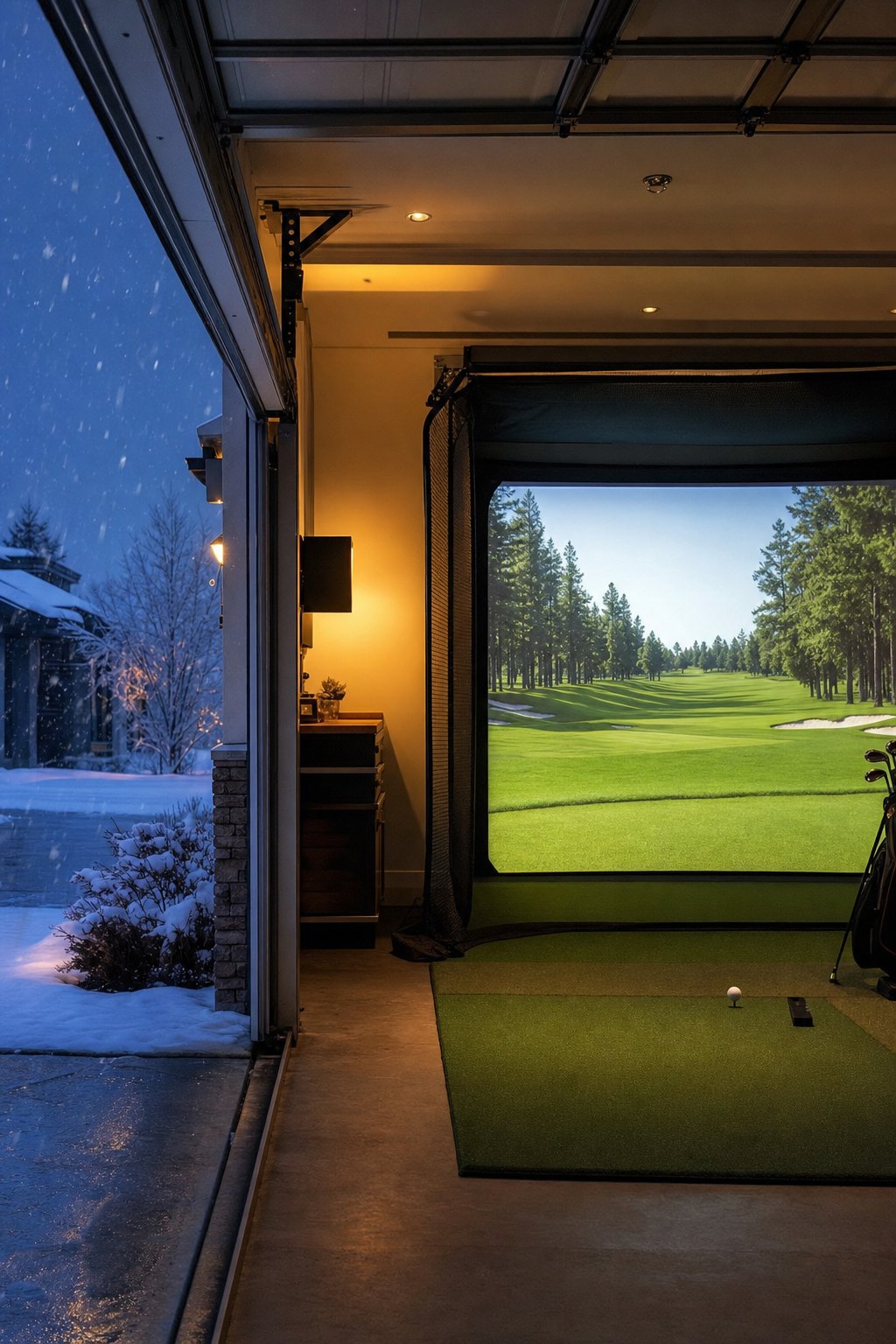
The Garage Bay
The most common real-world sim room, and for good reason: garages have the ceiling height, the concrete floor takes a mat without prep, and nobody cries over a mishit. A retractable screen or net keeps the parking spot usable. Our shed and garage guide covers insulation, heating, and the winter-proofing details that make it a year-round room.
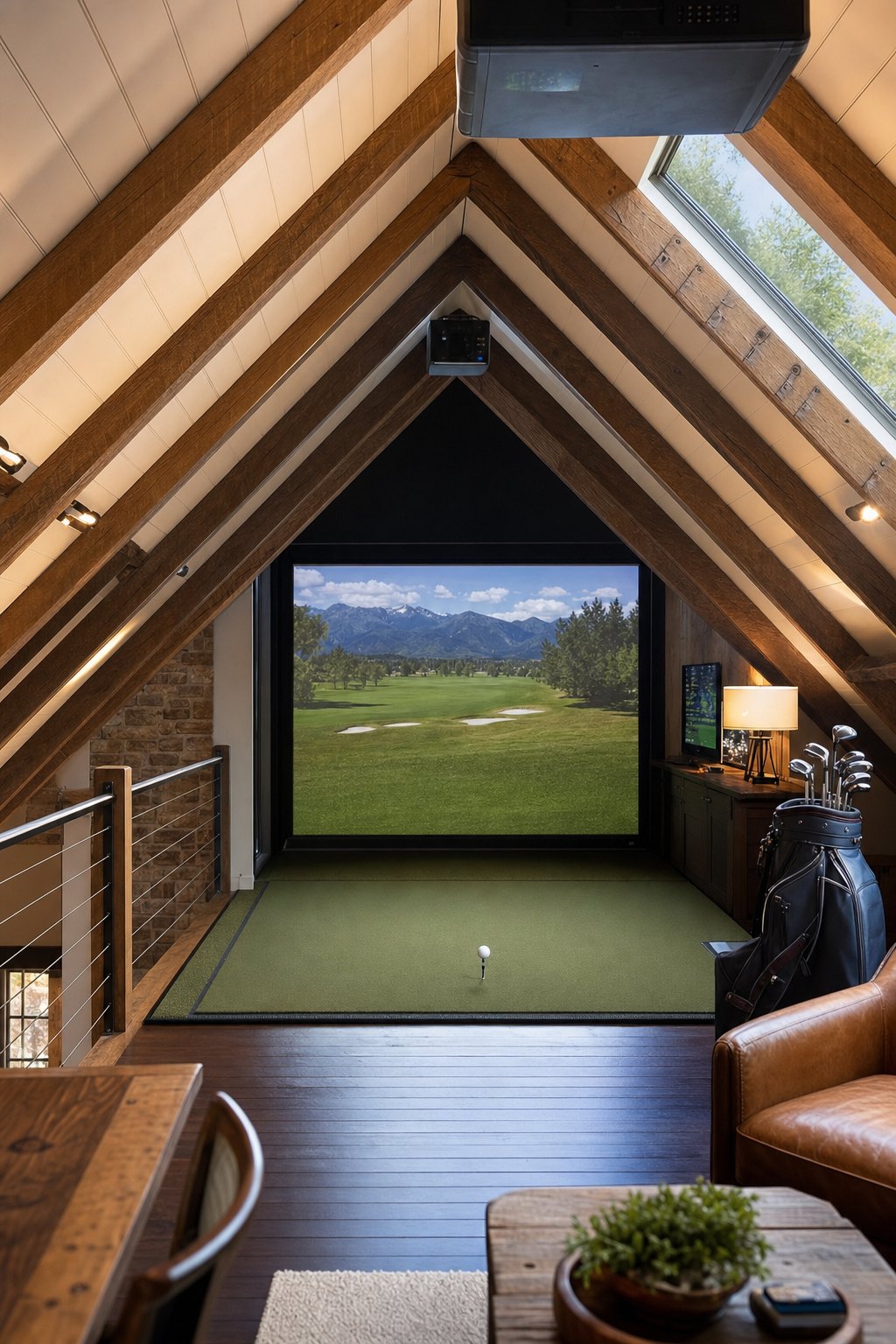
The Attic Conversion
The sneaky one: attics and lofts often have their full ceiling height exactly where you need it, at the peak, right where you swing. Put the mat under the ridge line, the screen on the gable wall, and the sloped sides become natural equipment storage. Measure your swing clearance with a club before committing; our ceiling height guide has the numbers.
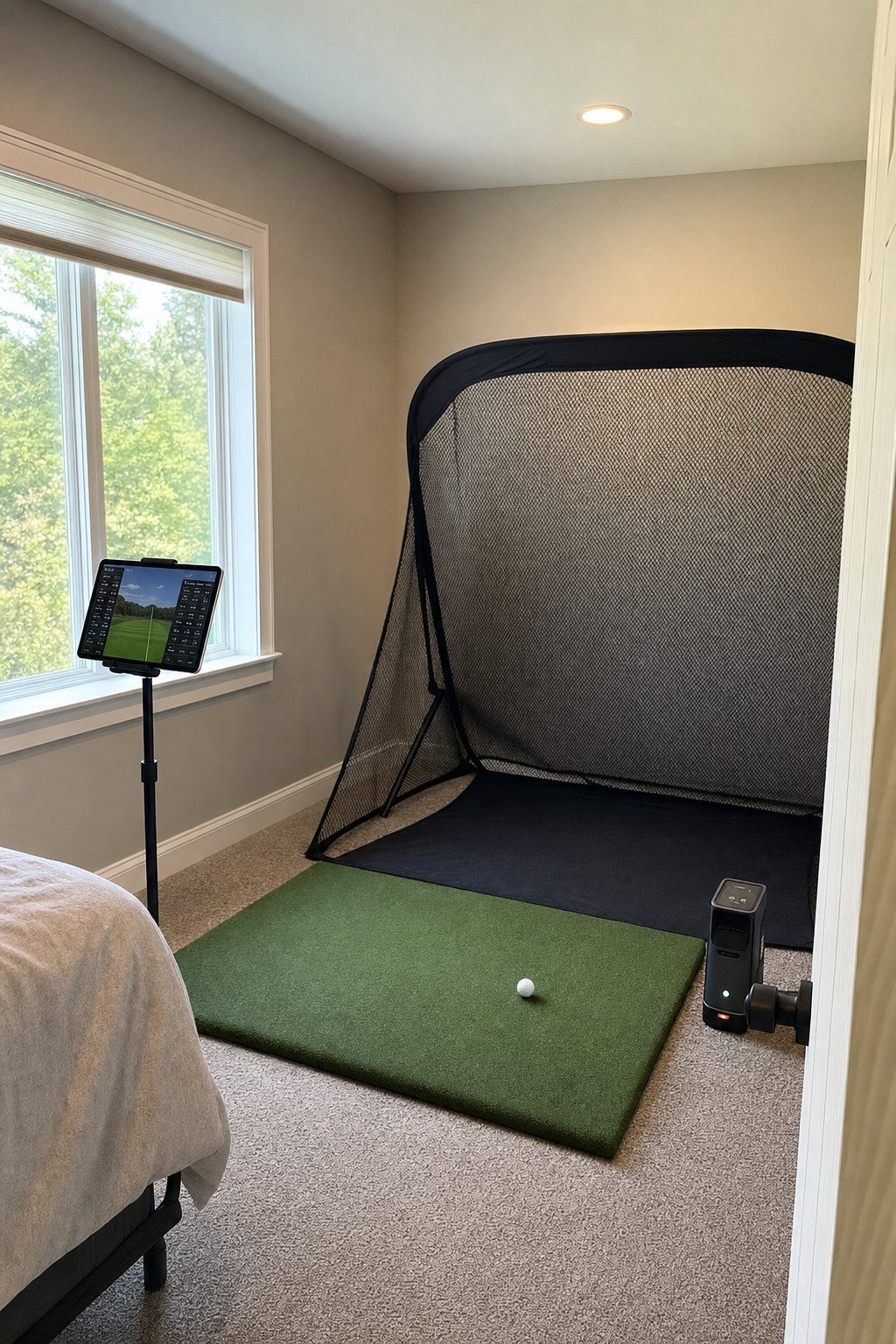
The Spare Bedroom Setup
Proof you don't need a dedicated wing: a net, a mat, and a launch monitor turn a 10-by-12 spare room into a practice studio for well under $1,500. No projector required, the monitor's app on a tablet is the display. It's the setup most golfers should actually start with; the sim-ready launch monitor guide covers which units work in tight indoor spaces.
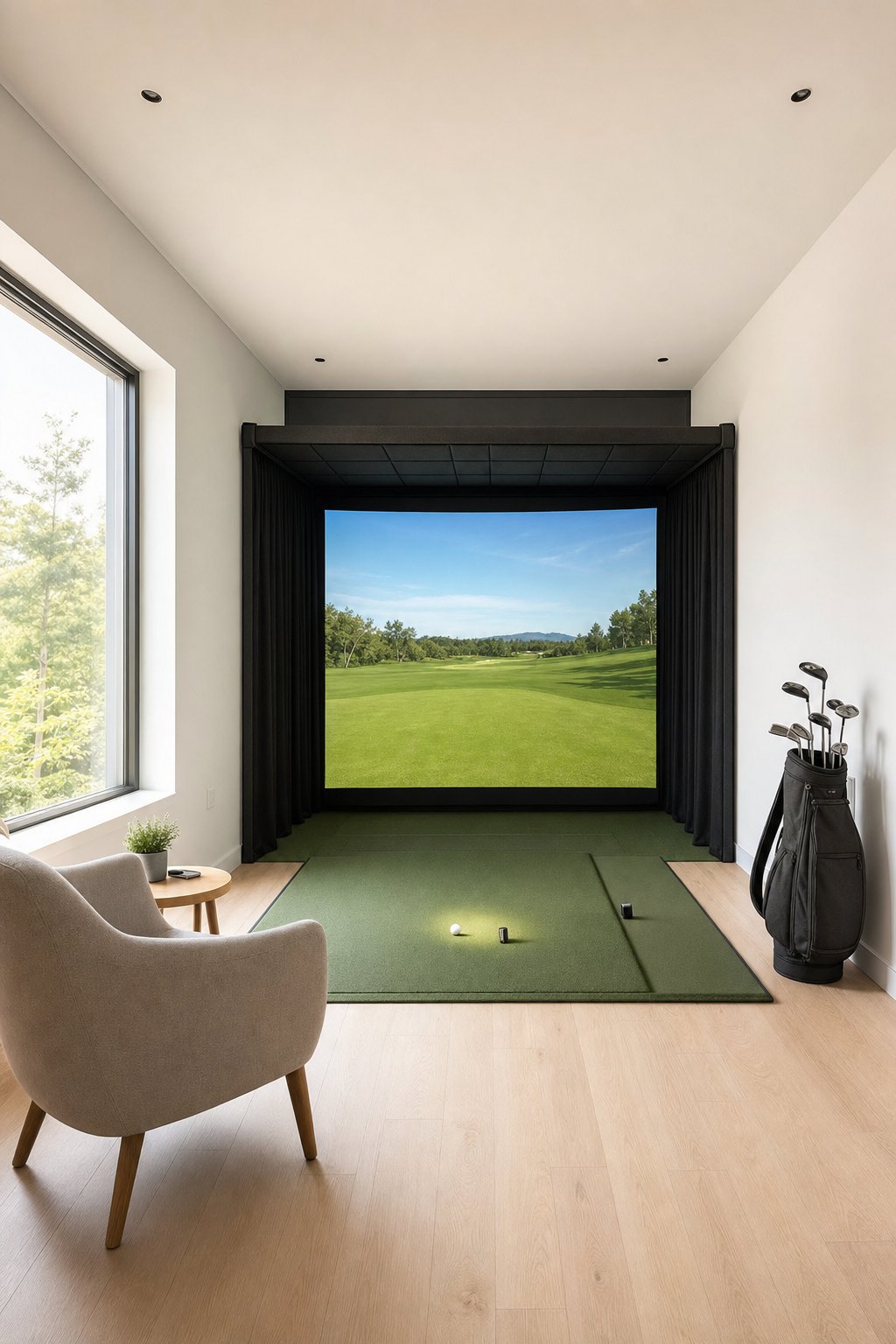
The Bright Minimalist Studio
Sim rooms don't have to be caves. A white-walled, daylight-lit studio with a clean screen and a slim mat reads like a design magazine and keeps the space multi-purpose. Light rooms also photograph your swing better if you use video. The trick is controlling glare on the screen: indirect daylight and a matte screen surface keep the projected image crisp.
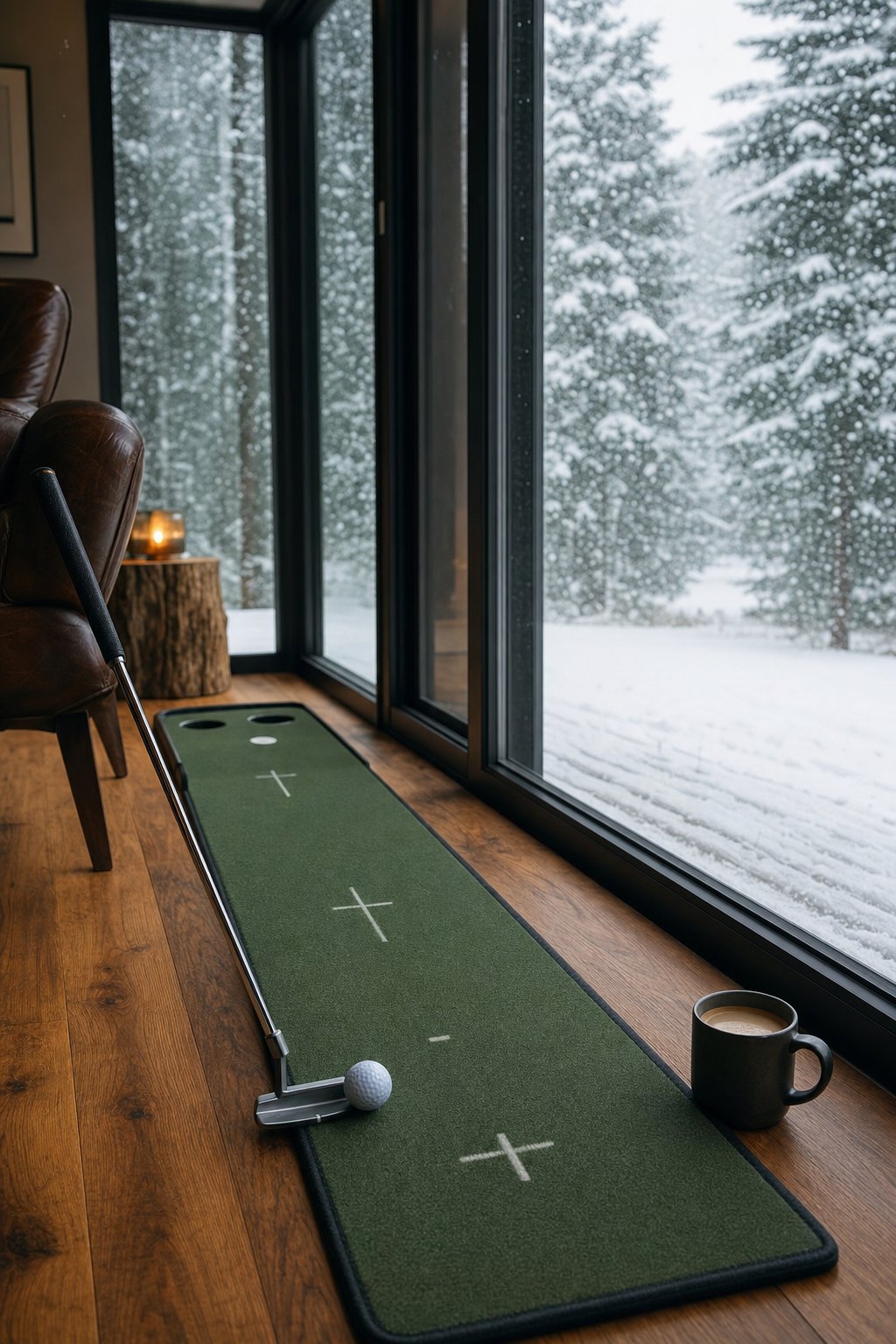
The Putting Nook
Not every golf room needs a full swing. A putting strip along a window wall, a bench, and a coffee table makes a genuinely pleasant corner of the house that happens to sharpen your stroke daily. Zero ceiling-height requirements, zero noise, and the lowest budget on this list: a quality putting mat and whatever chair you already love.
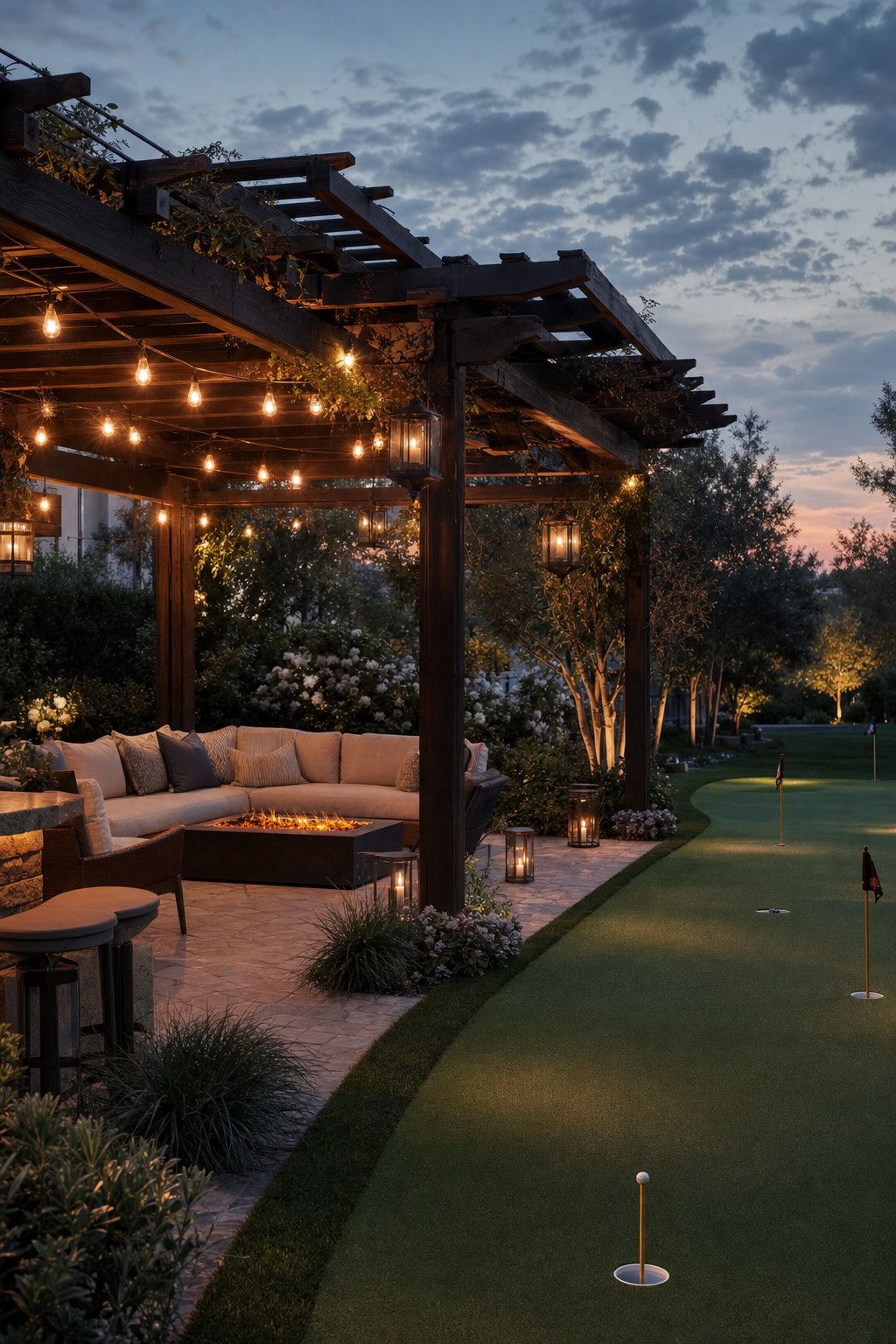
The Indoor-Outdoor Room
Where climate allows, the best sim room is half outside: a covered patio or pergola with the green running through it blurs the line between practice and porch life. Pair it with our backyard golf ideas for the full property plan, and keep electronics on a cart you can wheel in when weather turns.
What Every Sim Room Needs (Before the Fun Parts)
Ceiling height: the make-or-break number. Most golfers need 9 to 10 feet to swing driver comfortably; measure your actual swing with your longest club, not a rule of thumb. Full details in the ceiling height guide. Room depth: you need space behind you for the swing, ball flight to the screen, and a gap behind the screen; roughly 15 feet of depth is comfortable for most setups. The launch monitor: indoor accuracy varies enormously by technology; photometric units shine in tight rooms while radar wants flight room. The sim-ready guide sorts them.
Then, and only then, the fun parts: impact screen, projector, flooring, and software. Budgets for the whole stack live in the cost guide.
FAQ
Get Better Golf-Gear Research in Your Inbox
New comparison guides, product updates, and practical simulator-planning research. No daily deal spam. Free bonus: the golf distance cheat sheet, instantly.