Garmin R50 vs Foresight GC3:
The Premium Camera Battle
Two triple-camera launch monitors, two thousand dollars apart. The R50 brings a built-in simulator nobody else has; the GC3 brings the fitting-room pedigree pros trust. Here's how the trade actually breaks down.
For a self-contained home setup, the R50 is the smarter buy: same camera-based measurement class, $4,999.99† vs $3,799.00†, and the built-in touchscreen means you're simulating the day it arrives with zero extra hardware. The GC3 wins for serious sim bays and fitting work: FSX software is the industry's benchmark for graphics and analysis, the used/resale market is deeper, and it's the unit teaching pros already trust. Spend the $2,000 difference on a projector and screen only if you'll actually build around it.
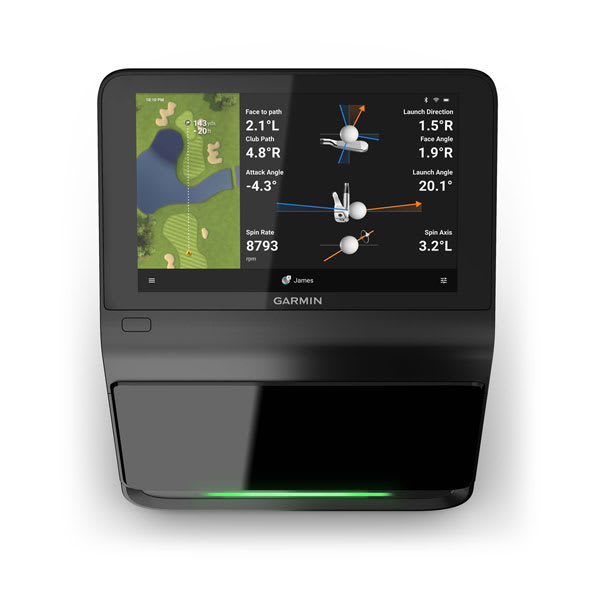
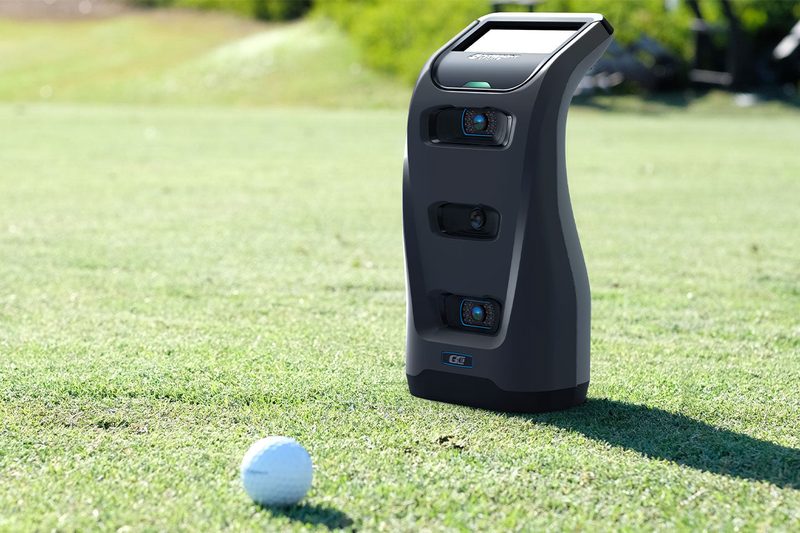
Manufacturer photos
Spec Comparison
| Garmin R50 | Foresight GC3 | |
|---|---|---|
| Price | $4,999.99† | $3,799.00† |
| Technology | Triple-camera optical | Triscopic (3-camera) photometric |
| Spin | Directly measured | Directly measured |
| Display / sim | Built-in 10" touchscreen simulator | Touchscreen for data; sim needs a PC |
| Simulator software | Home Tee Hero (43,000+ courses) + 3rd-party | FSX Play / FSX 2020 / E6 Connect |
| Subscription | $99.99/yr for full course library (optional) | None required for core data |
| Club data | Face angle, path, attack angle | Ball + club; full club face suite on GCQuad tier |
| Battery | ~4 hours | Built for tethered bay use |
| Pedigree | Consumer flagship (2024) | Fitting-room / tour standard lineage |
Same Tech Class, Different Philosophy
Both photograph the ball at impact with three high-speed cameras and directly measure spin: the data approach that separates premium units from radar. The philosophical split is what surrounds the cameras. Garmin built a consumer appliance: turn it on, the screen is right there, the course renders, done. Foresight built a measurement instrument that plugs into the most respected software ecosystem in golf: the same FSX platform running in fitting studios and teaching bays worldwide.
Neither approach is "more accurate" on paper at the ball-data level; both are in the class golfers buy when estimated numbers stop being good enough.
Software & Ecosystem
R50: Home Tee Hero's 43,000+ courses are rendered from mapping data: fun, vast, and instantly available on the built-in screen, but visually closer to a smart arcade than a photoreal sim. Third-party compatibility means you're not locked in. The $99.99/yr membership applies for the full library.
GC3: FSX Play is the graphics benchmark: laser-scanned courses that look like television broadcasts. The catch: it runs on a capable gaming PC you provide, projected on a screen you bought. The GC3's "no subscription required" advantage is real for data, though some features tier up.
The Value Math
Total cost to be actually simulating golf: the R50 is $4,999.99†, full stop. The GC3 is $3,799.00† + gaming PC (~$1,200+) + projector and impact screen if you want it on a wall: call it $9,000+ for the full experience. If that bay is your dream and your budget, the GC3 ecosystem rewards it. If you want premium data and golf-on-a-screen this weekend, the R50's math is hard to argue with.
Choose the R50 if: self-contained simplicity, portability between garage and backyard, and one purchase decision.
Choose the GC3 if: you're building a permanent bay, you care about photoreal sim graphics, or fitting-grade credibility matters for your teaching or fitting work.
FAQ
Get Better Golf-Gear Research in Your Inbox
New comparison guides, product updates, and practical simulator-planning research. No daily deal spam. Free bonus: the golf distance cheat sheet, instantly.